
Garage Door Opener Guide
Garage Door Opener Types: Belt vs. Chain vs. Wall-Mount
Choosing an opener involves more than comparing noise or price. Drive mechanism, mounting position, door balance, compatibility, motor specifications, and the model’s feature package all shape the right decision.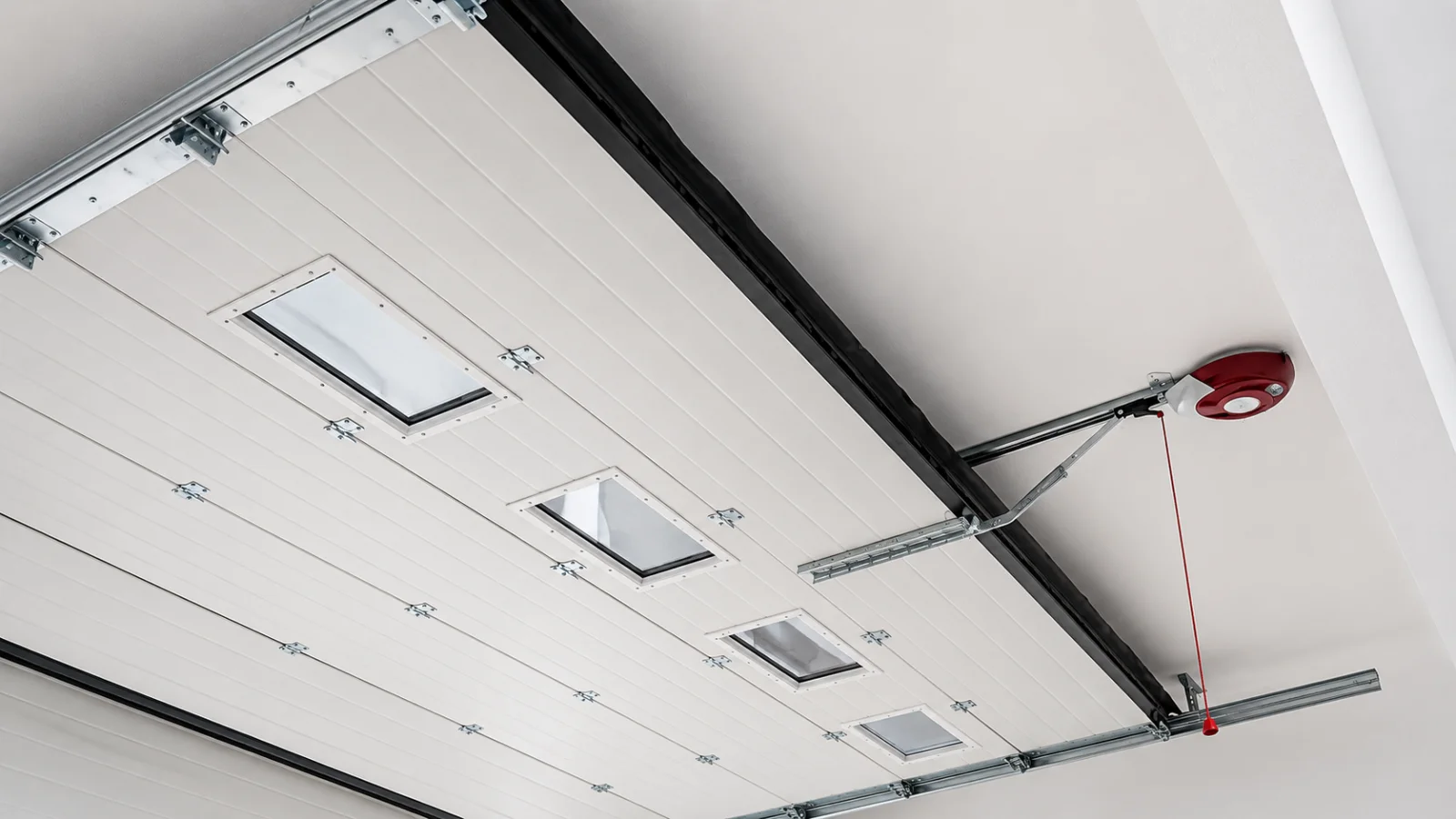
Belt-drive, chain-drive, and wall-mount garage door openers can all operate residential sectional doors, but they do not solve the same priorities in the same way. Belt and chain systems are commonly installed above the center of the door and move a trolley along a rail. A wall-mount opener uses a different arrangement, operating from beside the door through a compatible torsion shaft rather than occupying the center of the ceiling.
Those categories are useful starting points, not complete specifications. Two belt-drive models may use different motors, rails, controls, lighting, battery systems, and door-size limits. The same is true of chain and wall-mount products. A responsible comparison therefore starts with the door and garage, then narrows the choice to models whose published requirements fit the installation.
The Three Opener Types at a Glance
Chain-drive openers use a metal chain to move a trolley on an overhead rail. They are widely available and often considered when familiar construction and purchase price are important.
Belt-drive openers use a reinforced belt in a similar overhead trolley-and-rail arrangement. Their smoother, quieter operating character can be valuable in an attached garage, particularly near bedrooms or frequently occupied rooms.
Wall-mount openers, also called side-mount or jackshaft openers, mount beside the door and connect to a compatible torsion shaft. They can free the central ceiling area, but they require suitable door hardware, shaft geometry, clearances, and installation conditions.
How a Chain-Drive Garage Door Opener Works
In a typical chain-drive system, the motor unit is suspended from the garage ceiling. A metal chain travels along the rail and moves a trolley connected to the door by an arm. The opener guides movement, while the door’s springs and counterbalance system manage most of the door’s weight.
Because the mechanism includes a metal chain and moving rail components, chain-drive operation is commonly more audible and may transmit more vibration than a comparable belt-drive system. Actual sound also depends on the motor, rail, mounting, door hardware, lubrication condition, and whether the door itself operates smoothly. A rattling or binding door should not be dismissed as a normal characteristic of the drive.
Chain systems are often chosen for their established design and value positioning. That does not mean every chain model is automatically stronger than every belt model. Lifting specifications, permitted door dimensions, rail configuration, motor design, and manufacturer limits belong to the individual model.
Maintenance guidance also varies by product. The chain or rail may require periodic inspection or lubrication according to the owner’s manual, while travel, force, reversal, safety sensors, and hardware should be checked as directed. Avoid improvised adjustments to springs or other high-tension door components.
How a Belt-Drive Garage Door Opener Works
A belt-drive opener usually follows the same general overhead layout: a ceiling-mounted motor unit, a rail, a moving trolley, and an arm connected to the door. The key difference is the drive medium. Instead of a metal chain, the system uses a reinforced belt; Chamberlain describes its belt construction as steel-reinforced rubber.
The absence of chain-on-rail metal contact can reduce drive noise and vibration. That practical difference is most noticeable when the garage shares a wall or ceiling with living space. Even so, “belt drive” does not make the entire door silent. Rollers, hinges, tracks, panels, mounting points, and the motor can all contribute sound.
Belt-drive models span different performance and feature levels. Some include DC motors, soft start and stop behavior, Wi-Fi, integrated lighting, or battery backup; others do not. The belt is only one part of the assembly, so product comparison should include the full specification rather than treating the drive label as a guarantee of power or features.
Periodic inspection remains appropriate. Follow the manufacturer’s instructions for belt tension, rail condition, safety reversal, photoelectric sensors, and any model-specific service. A belt should not be tightened to compensate for an unbalanced or mechanically resistant door.
How a Wall-Mount Garage Door Opener Works
A wall-mount opener changes the installation arrangement rather than merely substituting one drive material for another. The unit mounts high beside the garage door and couples to the torsion or spring tube on a compatible system. Turning that shaft helps operate the door without a conventional motor-and-rail assembly across the center of the ceiling.
This configuration can preserve overhead space for lighting, storage, ceiling fans, or other appropriate uses. It may also reduce the vibration transmitted by a ceiling-mounted powerhead and rail. Remote lighting, a door lock, cable-monitoring components, or other accessories may be part of a particular package.
Compatibility is the critical limitation. Current manufacturer documentation identifies requirements involving sectional-door construction, torsion-shaft systems, available shaft length, side and ceiling clearance, winding direction, cable condition, nearby power, and permitted door dimensions or weight. Some wall-mount products exclude extension-spring systems, reverse-wound springs, low-headroom arrangements, or one-piece doors.
For that reason, wall-mount should not be treated as a premium drop-in replacement for every overhead opener. The specific door and shaft arrangement must match the selected model’s pre-purchase checklist and installation manual.
Belt vs. Chain vs. Wall-Mount: Side-by-Side Comparison
This table summarizes typical characteristics. Individual products can differ, so published model documentation remains the final authority.
| Factor | Chain drive | Belt drive | Wall-mount |
|---|---|---|---|
| Position | Typically overhead with a rail and trolley. | Typically overhead with a rail and trolley. | Beside the door at a compatible torsion shaft. |
| Mechanism | Metal chain moves the trolley. | Reinforced belt moves the trolley. | Unit turns the compatible shaft directly. |
| Noise and vibration | Generally more audible; condition and installation matter. | Generally quieter and smoother than comparable chain systems. | Avoids an overhead rail and may reduce transmitted vibration. |
| Ceiling space | Rail and powerhead occupy the central ceiling area. | Rail and powerhead occupy the central ceiling area. | Frees the center ceiling area. |
| Maintenance focus | Chain, rail, mounting, controls, and safety checks per manual. | Belt, rail, mounting, controls, and safety checks per manual. | Shaft coupling, clearances, cable monitoring, lock, and safety checks per manual. |
| Compatibility | Confirm model, rail, door size, and installation requirements. | Confirm model, rail, door size, and installation requirements. | Requires a suitable door, torsion system, shaft geometry, and clearances. |
Which Type Is Quieter?
For otherwise comparable overhead systems, a belt drive is generally selected when lower operating noise and vibration are priorities. Wall-mount designs can also be attractive near living space because the powerhead and rail are not suspended from the center of the ceiling. Chain drives remain functional choices where additional operating sound is acceptable.
That ranking is not a laboratory measurement across every product. A DC belt model with soft start and stop cannot be fairly compared with an unrelated chain model while attributing every difference to the belt. Door balance, rollers, hinges, track alignment, mounting surfaces, and installation quality can change what occupants hear. If the door is unusually noisy, identify whether the sound comes from the opener or the door system before choosing a replacement.
Does Drive Type Determine Lifting Power?
No. The words belt, chain, and wall-mount describe how or where the opener transfers motion; they do not by themselves establish the complete operating capacity. Compare the exact model’s permitted door type, dimensions, weight, rail or shaft requirements, motor specification, opening speed, and extension options.
The garage door should also be properly balanced by its spring system. An opener is not intended to replace the counterbalance system or overcome a door that binds, sticks, or is excessively heavy to move correctly. Manufacturer instructions commonly direct users to address an unbalanced or binding door before operating or installing an opener.
This distinction prevents a common purchasing mistake. A homeowner may assume that chain means stronger or that a large advertised motor figure guarantees compatibility. The meaningful question is whether the complete opener model is approved for the specific, properly functioning door and installation.
When a Wall-Mount Opener Makes Sense
A wall-mount model may deserve consideration when keeping the center ceiling clear has real value, the garage configuration provides the required side clearances, and the door uses a compatible torsion-shaft system. It can be useful where overhead lighting, a tall ceiling, or appropriately planned storage would conflict with a traditional rail.
It may not be suitable when the door uses extension springs, lacks the required shaft exposure, has a low-headroom or reverse-wound arrangement excluded by the model, is a one-piece door, or cannot meet the product’s clearance and outlet requirements. Existing cable condition and door travel also matter because side-mounted products depend on the door remaining controlled through its travel.
The safest decision is model-specific. Measure and inspect the proposed installation against the manufacturer’s current pre-purchase checklist instead of assuming every unit marketed as wall-mount has identical requirements.
What About Smart Features and Battery Backup?
Wi-Fi controls, phone alerts, scheduled closing, integrated cameras, lighting, automatic locks, and battery backup belong to particular models and feature packages—not to one drive category. Current manufacturer ranges include connected and battery-equipped products across more than one opener type.
If these features matter, verify exactly what is built in, what requires an accessory or subscription, which home network is supported, and how the manual describes operation during a power outage. Battery backup deserves its own evaluation of use, maintenance, replacement, and local outage priorities; it should not overshadow the fundamental compatibility decision.
Safety sensors and secure access technologies also vary by model and generation. They are important, but they do not correct an incompatible installation or a mechanically unsound door.
Questions to Ask Before Choosing an Opener
- Is the garage attached to a bedroom, office, or frequently occupied living space?
- How important is reducing transmitted noise and vibration?
- Does the overhead area need to remain clear for lighting or other appropriate uses?
- What door type, size, weight, spring system, and lift configuration are installed?
- Is the door balanced and moving smoothly before an opener is selected?
- Which exact opener models list compatibility with that door and installation?
- Can the garage meet the rail, shaft, side-clearance, ceiling-clearance, and outlet requirements?
- Are Wi-Fi controls, lighting, automatic locking, or battery backup priorities?
- What inspection and maintenance does the manufacturer require?
Frequently Asked Questions
Is belt drive better than chain drive?
Not universally. Belt drive is often preferred when quieter, smoother operation matters. Chain drive may suit a value-focused project where additional sound is acceptable. The specific model, door, installation, and desired features determine the better fit.
Are chain-drive openers stronger?
The chain material does not establish the complete opener capacity. Compare each model’s motor, rail, permitted door dimensions and weight, and manufacturer compatibility requirements. A properly balanced door is essential for any type.
Are belt-drive openers quieter?
They are generally quieter than comparable chain-drive systems because the reinforced belt avoids chain-on-rail metal contact. Door hardware, motor design, mounting, and maintenance still influence total sound.
Can any garage door use a wall-mount opener?
No. Wall-mount products require compatible sectional doors, spring or torsion-shaft arrangements, clearances, and other model-specific conditions. Some products exclude extension springs, reverse-wound systems, low-headroom arrangements, and one-piece doors.
Do wall-mount openers save ceiling space?
Yes. Their side-mounted configuration removes the conventional central rail and powerhead. The benefit matters only when the door and garage meet the selected model’s installation requirements.
Do smart controls and battery backup depend on drive type?
No. These are model-level features available in multiple product categories. Confirm what is included, what is optional, and how each feature operates before comparing quotations.
Primary Sources and Further Reading
- Chamberlain — Garage Door Opener Buyer’s Guide
- Chamberlain — RJO101 Wall-Mount Opener Specifications and Support
- Genie — Garage Door Opener Drive-Type FAQ
- Genie — Model 6172 Wall-Mount Requirements and Features
Choosing an Opener
Unsure Which System Fits Your Garage?
An independent provider can assess the existing door, balance, clearances and opener requirements before recommending compatible options. DoorVo accepts enquiries and does not perform inspections.
Related planning guides
Drive type alone does not determine outage performance. Review battery backup compatibility and maintenance separately. If you are replacing the door as well, our installation guide explains why the opener and complete door system must be matched.