
Garage Door Cable Repair in Sugar Land
Frayed, loose, off-drum, or snapped cables can leave a garage door crooked, jammed, or unsafe. DoorVo accepts enquiries about cable diagnosis and repair for residential and commercial doors across Sugar Land.
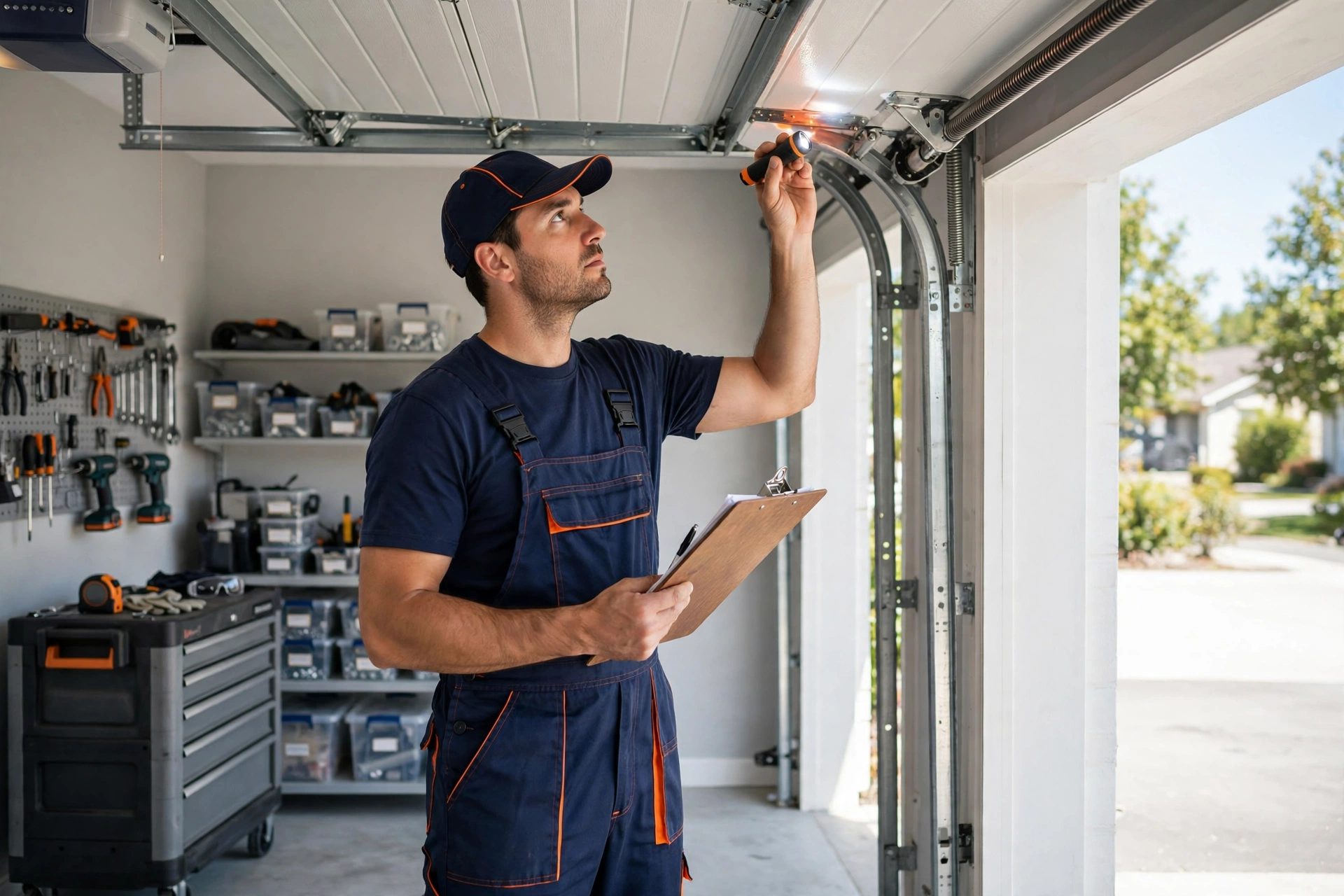
System Assessment
An on-site assessment can help identify the appropriate garage door repair options.
Service Details
Discuss credentials, insurance and the proposed work directly with the independent provider.
Homes & Businesses
Garage door information for residential and commercial property needs.
Urgent Service Enquiries
Support for urgent cable problems.
Cables Carry the Door’s Lifting Force
Garage door cables work with springs and drums or pulleys to raise and lower the door evenly. When a cable loses tension, slips off a drum, frays, or breaks, one side may move differently from the other.
A cable problem can also change door balance and increase resistance through the moving system. For that reason, diagnosis considers cable routing and condition together with the drums or pulleys, spring tension, bottom brackets, and overall door balance.
Signs Your Garage Door Cable Needs Attention
Cable hanging loose
The cable may have lost tension or come off its drum or pulley.
Frayed or rusted strands
Broken strands, corrosion, flattening, or kinks indicate lost strength.
Door rises unevenly
Different cable tension can pull one side higher and bind the door.
Door stuck partly open
A snapped or displaced cable can prevent balanced travel.
Grinding or scraping
The cable may be rubbing, misrouting, or winding incorrectly.
Opener strains or reverses
An unbalanced door can create excess resistance for the opener.
Cable Service for Common Garage Door Systems
Cable routing depends on the spring and lifting system. Torsion and extension arrangements use different drums or pulleys, while residential and commercial doors introduce different weight, usage, and hardware considerations.
Torsion-spring lift cables
Cables wind onto drums at the shaft ends and must track evenly with correct tension.
Extension-spring cables
Lift and safety cables route through pulleys and must remain aligned and secure.
Residential doors
Door weight, balance, track alignment, and hardware condition affect cable performance.
Commercial doors
Heavier and higher-cycle assemblies require compatible lifting components and careful inspection.
Find the Cause Before Replacing the Cable
Cables may deteriorate through corrosion, abrasion and fraying, repeated flexing, or incorrect tension. Damaged drums or pulleys, worn bearings, obstruction, lost spring tension, uneven door position, and track or roller resistance can also cause a cable to loosen, fail, or come off the drum.
An off-drum cable may be a symptom of one of these conditions rather than the root cause, so the reason it displaced should be identified before the cable is returned to service.
What Happens When a Garage Door Cable Comes Off the Drum?
The drum controls how the lift cable winds and unwinds as the door moves. When a cable leaves its groove or winds unevenly, one side may stop traveling correctly, leaving the door crooked, jammed, or visibly slack on one side.
Possible relationships include lost spring tension, an obstruction, uneven movement, drum damage, track or roller resistance, or poor door balance. Simply placing the cable back on the drum may not correct the underlying condition. Diagnosis should secure the door and evaluate the system without unsafe DIY tensioning.
Cables, Springs, Drums, and Door Balance Work Together
A garage door lifting system works as a connected sequence: the spring stores and provides lifting force; cables transfer that force; drums control cable travel; balanced movement helps both sides remain level; and tracks and rollers guide the door.
The opener should move a properly balanced system rather than replace spring force. Spring failure can alter cable behavior, cable problems can create uneven lifting, and imbalance can increase opener load. Diagnosis therefore considers the spring, cable, drum, guiding hardware, balance, and opener together—without assuming springs and cables always require simultaneous replacement.
Cable transfer
The cable transfers that force to the bottom of the door.
Drum travel
The drum controls how cable winds and unwinds during travel.
Spring force
The spring stores and provides lifting force for the door.
Level lifting
Balanced cable movement helps both sides remain level.
Tracks and rollers
Tracks and rollers guide the door while limiting unwanted resistance.
Opener load
The opener moves a properly balanced system; it does not replace spring force.
- SPRING →
- CABLE →
- DRUM →
- BALANCE →
- TRACK / ROLLER →
- OPENER LOAD
Adjustment, Reseating, or Cable Replacement?
A loose cable that remains undamaged may sometimes be reseated and correctly tensioned after the underlying cause is resolved. Frayed, kinked, corroded, stretched, or snapped cables generally require compatible replacement.
The technician also checks the opposite cable and the hardware directly involved in cable operation so the repaired side is not returned to service with an unresolved lifting problem.
How a Provider Assesses a Cable Problem
The sequence begins by securing the door and identifying the cable and spring configuration. Cable condition, both sides where applicable, routing, drums or pulleys, springs, bottom hardware, tracks, rollers, door level and balance, and opener behavior under load are then considered together.
Cables and springs can retain significant tension. This inspection-first approach provides safety guidance and a repair decision without encouraging hazardous DIY adjustment.
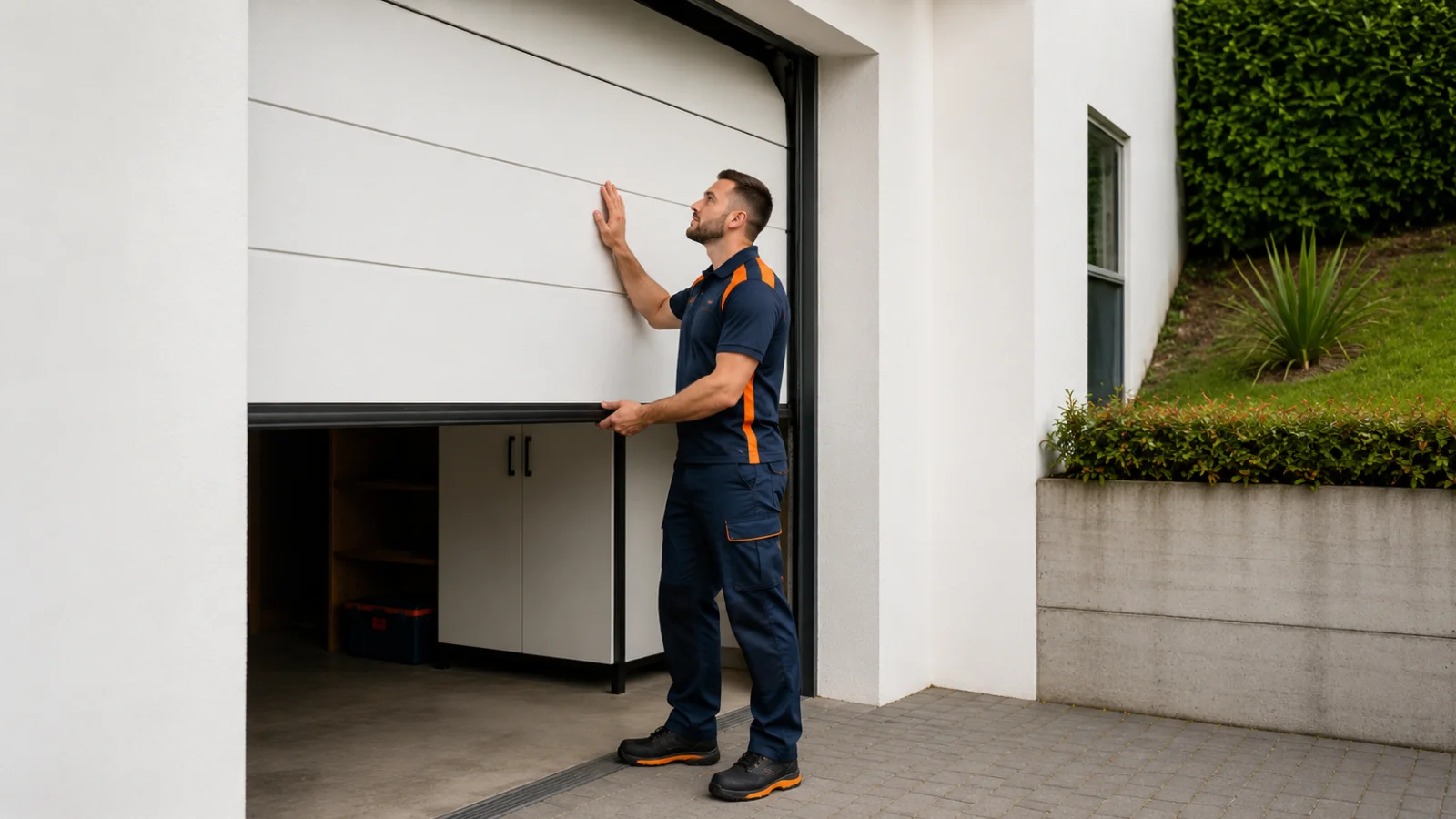
A Broken Cable Can Make the Door Unsafe
A snapped or hanging cable can leave the door crooked, stuck open, unable to close securely, or trapping a vehicle inside. Keep people and vehicles clear. Do not repeatedly operate, pull, or try to lift an unsupported or crooked door. Send an urgent service request describing the problem. Provider availability, coverage and appointment times must be confirmed; response times are not guaranteed.
Why Sugar Land Homeowners Choose DoorVo for Garage Door Cable Repair
A cable repair decision should reflect an on-site assessment of the lifting system. Confirm the proposed scope, provider credentials, charges and appointment before authorizing work.
System Assessment
An on-site assessment can help identify the appropriate garage door repair options.
Service Details
Discuss credentials, insurance and the proposed work directly with the independent provider.
Scheduling Enquiries
Service availability for urgent cable problems.
Urgent service enquiries
Support when a cable failure cannot wait.
A Careful Cable Repair Process
1. Secure and inspect
Assess the door position and cable condition before handling loaded components.
2. Trace the cause
Identify why the cable loosened, slipped, frayed, or failed.
3. Repair the system
Reseat, adjust, or replace the cable and correct directly related hardware as needed.
4. Balance and test
Confirm level travel and balanced movement before controlled opener testing.
Residential & Commercial Garage Door Cable Repair
Residential cable repair
Service for residential lift cables, paired cable condition, routing, tension, and directly related hardware.
Commercial cable repair
Service for commercial cable systems based on door configuration, lifting requirements, and compatible components.
What Affects Garage Door Cable Repair Cost?
The repair scope depends on the cable system and what caused the problem. Inspection clarifies whether the need involves reseating, adjustment, replacement, or related hardware correction. Ask the independent provider to explain the estimate and any inspection or service charges before work begins.
Door and system configuration
Accessibility and residential or commercial configuration affect the service plan.
Extent of cable damage
Frayed, broken, or off-drum conditions can require different repair work.
One or both sides
Both sides are assessed where paired condition affects the recommendation.
Drums, pulleys & related hardware
Drum, pulley, bottom-hardware, track, or roller damage can change the repair scope.
System and cable type
Torsion and extension systems route and load cables differently.
Spring and balance condition
Spring condition and door balance can influence cable behavior and required correction.
Garage Door Cable Repair Across Sugar Land
DoorVo accepts enquiries about residential and commercial cable diagnosis across Sugar Land and nearby communities. Service focuses on the cable, lifting hardware, door balance, and related system conditions that determine the appropriate repair.
- Sugar Land
- Greatwood
- New Territory
- Telfair
- First Colony
- Riverstone
- Sugar Creek
- Stafford
- Missouri City
- Richmond
Garage Door Cable Repair FAQs
No. Stop operating it because the door may be uneven, extremely heavy, or unsupported.
Possible causes include lost spring tension, obstruction, incorrect tension, a damaged drum, uneven door position, or resistance in the moving system.
Often both have similar age and wear, but the decision should follow inspection of both sides.
Broken strands, rust, flattening, kinks, abrasion, uneven movement, or scraping sounds can indicate cable damage.
Yes. They work with loaded springs and should be handled by a trained technician.
Sometimes, but only after the cause of the cable coming off the drum is identified and the cable is confirmed to be serviceable.
Timing depends on the failure, door position, cable system, and related damage.
Yes. DoorVo accepts enquiries about residential and commercial garage door service.
Cost varies with cable type and size, one- or two-sided replacement needs, accessibility, door configuration, and related damage.
Send an urgent service request describing the problem. Provider availability, coverage and appointment times must be confirmed; response times are not guaranteed.
Request Garage Door Cable Repair in Sugar Land
Get a clear assessment of the cable, lifting hardware, door balance, and opener load. DoorVo accepts enquiries about estimate requests for residential and commercial service.