
DOORVO · SUGAR LAND HOMEOWNER GUIDE
Garage Door Won’t Close in Sugar Land? Safe Checks Before You Call
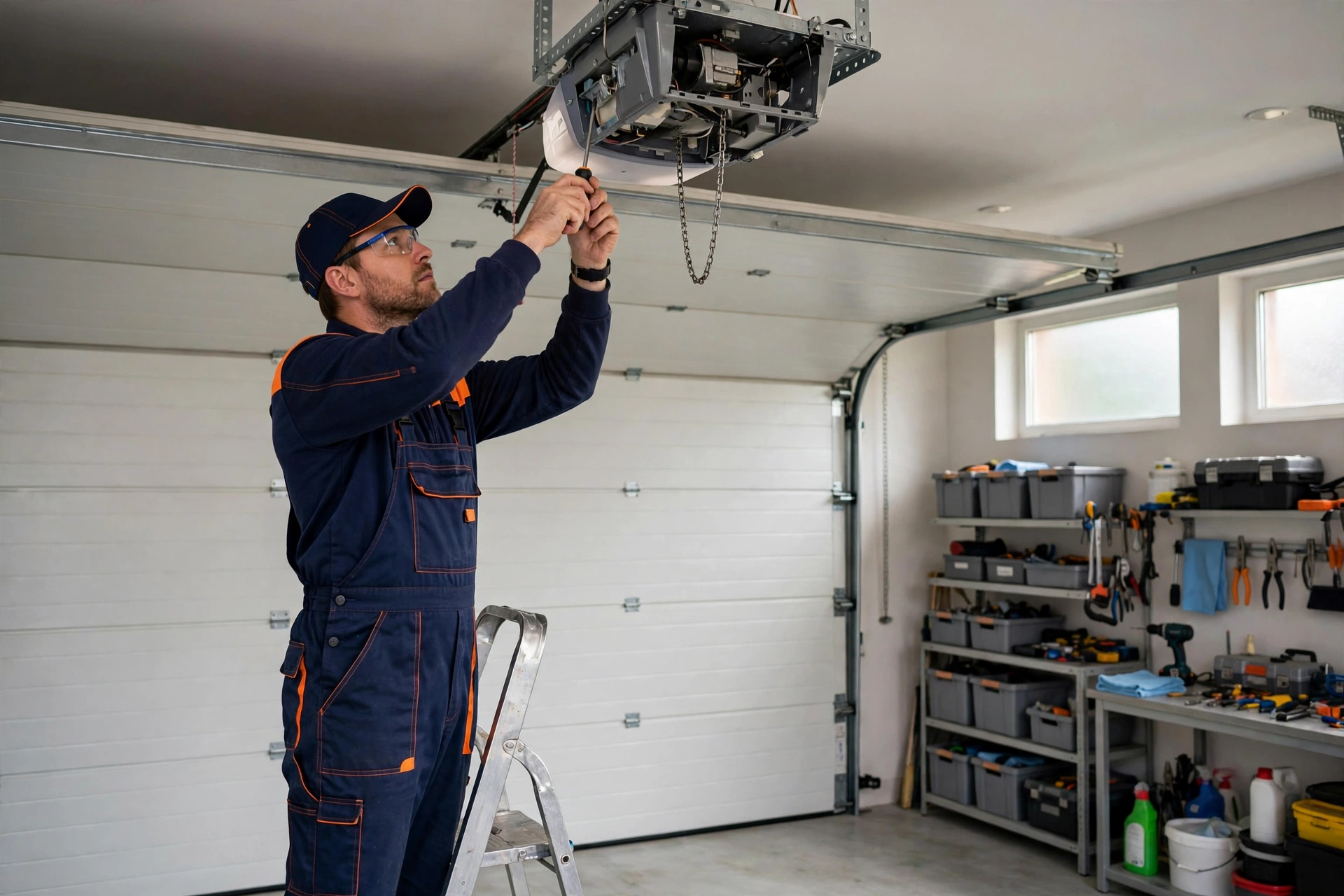
A garage door that will not close can leave a Sugar Land home unsecured, but forcing it down can turn a control problem into a mechanical failure. Start with observations you can make from a safe position. A blocked sensor, interrupted power, a damaged cable and a binding door need different responses.
Stop troubleshooting if the door looks unstable
Keep people, pets and vehicles away from the opening. Stop operating the door if it is crooked, off its tracks, hanging unevenly, or has a loose cable, visibly broken spring or buckled section. Do not stand underneath it, loosen hardware, adjust springs or pull the emergency release on an open or unsupported door. Request urgent garage door repair assistance instead.
Safe checks before you call
- Observe the doorway. Look for a bin, tool, stored item or debris blocking the opening or sensor beam. Remove an obstruction only if you can reach it without entering an unstable door’s path or touching moving components.
- Look at the safety sensors. Photo-eye sensors are normally positioned near the bottom of the opening. Note whether something blocks the line between them and whether their indicator lights are steady, flickering or off. A shifted bracket or dirty lens can interrupt the signal. Clean an accessible lens gently and follow the instructions for your exact opener model. Do not cut or reconnect wiring, bypass sensors or hold controls to override a fault.
- Compare the controls. Note whether the remote, keypad and wall control behave differently. If the wall control works but the remote does not, report that distinction. Check the manual for lock mode and the correct remote battery; do not assume the motor has failed.
- Note power and error signals. Check whether the opener has normal lights or a visible diagnostic pattern. Do not open the motor housing. If a protective device repeatedly trips, or you see damaged wiring, smell burning or find water near electrical equipment, stop and seek qualified help.
What the symptom can tell you
| What you notice | Useful information to report |
|---|---|
| Starts closing, then reverses | Where it reverses, whether it touches an object, and sensor light behavior. |
| Reaches the floor, then reopens | Whether the bottom seal contacts the floor normally. Travel settings or resistance may need assessment. |
| Motor hums but the door stays still | Stop repeated attempts. The cause may involve the drive assembly or the door’s mechanical system. |
| One side hangs lower | Stop using the door. Cables, springs, rollers or track alignment may be involved. |
| Works from one control only | Which control works, recent battery changes and any model-specific lock indication. |
These patterns help describe the problem; they do not establish a diagnosis. Diagnostic light meanings differ by brand and model. Use the label and owner’s manual rather than a universal flash-count chart.
Do not increase force to make a binding door close
Closing force and travel adjustments can affect the safety-reversal system. More force does not correct damaged rollers, track resistance or lost spring support. Ask a qualified provider to assess door movement and the safety system together. Our opener repair guide explains the controls and drive components; cable repair and spring repair cover lifting-system symptoms.
What Sugar Land homeowners should record
Include your neighborhood and ZIP code, whether the garage is the property’s only practical access, and whether the opening can be secured without moving the damaged door. Report recent impact, a power interruption, visible water exposure or a change in normal sound. Do not assume heat or humidity caused the fault simply because the weather changed. See our Texas heat and humidity guide for preventive context.
If replacement sections or a complete new door become necessary, check the current exterior-appearance requirements of your association. HOA approval and municipal requirements are separate matters. A closing fault alone is not evidence that the complete door needs replacing.
Before authorizing a repair visit
Ask the independent provider to confirm coverage, appointment availability, inspection or dispatch charges and any after-hours fee. Request an explanation of the diagnosed fault and an itemized estimate before authorizing work. Ask which operating and safety checks will be completed afterward. Routine maintenance can help identify wear, but it is not a substitute for repairing a failed component.
Frequently asked questions
Can I pull the release rope to close the door?
Do not disconnect an open, crooked or possibly unsupported door. A damaged spring or lifting system can allow it to fall. Have the condition assessed.
Do lit sensors mean the door is safe?
No. Sensor indicators describe part of the opener’s safety system. They do not establish that springs, cables, tracks and panels are sound.
Does a humming opener need replacing?
Not necessarily. The drive, controls or mechanical door system may be involved. Stop repeated attempts and request diagnosis before choosing repair or replacement.
Request help through DoorVo
Send DoorVo a garage door service enquiry with your symptoms and property location. DoorVo is an enquiry website; independent service providers perform the work. Availability, charges and terms must be confirmed directly with the provider.